
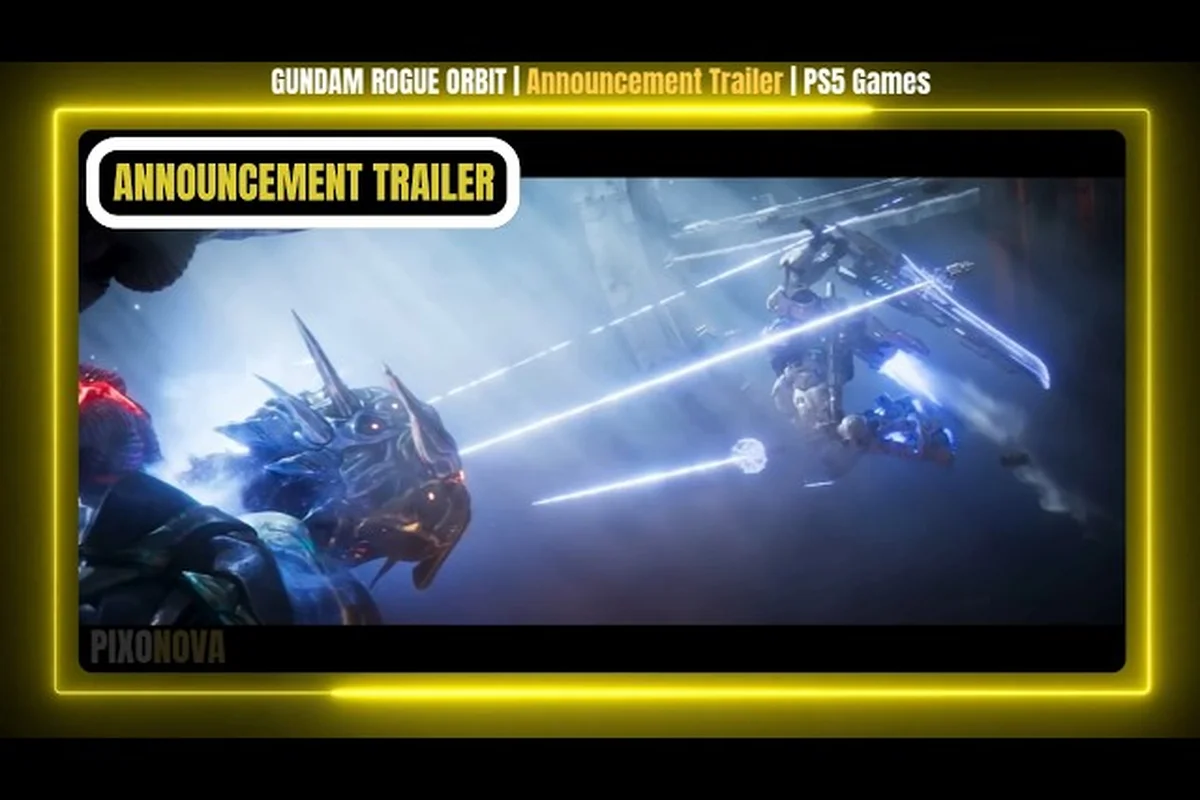
Tuning the GUNDAM ROGUE ORBIT system spec is the fastest way to lock in smooth frame rates before launch day, and the difference between a sloppy configuration and a dialed-in one shows up immediately in mobile suit combat. Because the game blends high-mobility arena dogfights with detailed mechanical destruction, your graphics settings, controller support, and Steam Deck tuning all determine whether each AP-U build reads clearly on screen. This guide walks through every confirmed GUNDAM ROGUE ORBIT spec requirements detail Bandai Namco has published, so you can build a configuration that works the moment servers flip on March 4, 2027.
Confirmed GUNDAM ROGUE ORBIT System Spec Targets
Bandai Namco has officially confirmed a 64-bit Windows target with full controller support, but the concrete minimum and recommended hardware numbers are still labeled Additional Notes TBA on the GUNDAM ROGUE ORBIT on Steam store page. That said, the high-mobility mecha action format and the dual-launch on PS5 plus Xbox Series X|S tell us a lot about what the PC port will demand.
Looking at the official GUNDAM ROGUE ORBIT Steam store page, the confirmed feature flags directly shape what we should expect from the eventual gundam rogue orbit system spec listing — for example, HDR availability implies a 10-15% GPU overhead versus SDR rendering, while the listed DualShock and DualSense Controller Support alongside native keyboard/mouse input tells us the build will reserve a small but consistent memory pool for Steam Input layer translation, nudging the effective RAM floor higher than a pure Windows 10 64-bit baseline would suggest.
-
Single-player, Multi-player, Co-op, Online Co-op — every mode shares one rendering pipeline
-
Steam Achievements, Steam Cloud, Family Sharing — background services that consume a small slice of RAM
-
DualShock and DualSense Controller Support, Partial Controller Support — native gamepad hooks regardless of input method
-
HDR available — when your display supports it, HDR adds roughly 10-15% GPU overhead at native resolution
Because the official page explicitly lists a 64-bit processor and OS as the baseline, players still running 32-bit Windows or older dual-core laptops can rule out a clean install at the recommended tier. Our deeper GUNDAM ROGUE ORBIT PC requirements walkthrough expands the launch-day configuration step by step.
What The Current Confirmed Specs Actually Mean
| Confirmed Attribute | Official Status (Steam) | Implication For Your Build |
|---|---|---|
| OS architecture | 64-bit processor and OS required | Drop any 32-bit Windows or pre-Win10 hardware from your shortlist |
| Controller support | DualShock, DualSense, Partial | Xbox, PlayStation, and generic gamepads all work; keyboard mouse is fully supported |
| HDR | Available | Budget 10-15% extra GPU headroom when toggling HDR on at 1440p or 4K |
| Online co-op | Confirmed | A wired Ethernet connection is the safer choice for online co-op stability |
| VRAM target (community estimate) | TBA | Community estimates land around 6 GB for 1080p, 8 GB for 1440p, 10-12 GB for 4K |
Community testing on the Gundam Rogue Orbit subreddit suggests that the same UE-style rendering that drives the State of Play demo tends to favor modern 6-core CPUs and 16 GB of RAM, but treat any number outside the official sheet as advisory until Bandai Namco publishes the final spec requirements PDF.
GUNDAM ROGUE ORBIT Graphics Settings To Tune First
Every confirmed GUNDAM ROGUE ORBIT graphics settings category is wired to a specific performance cost, and the right order to tune them is texture quality, shadow quality, then post-processing. Skipping that order is the most common reason players lose frame rate without understanding where the budget went.
The Three Settings That Move The Frame Rate Needle
| Setting | Performance Cost (1080p) | When To Drop It |
|---|---|---|
| Texture Quality | 2-4% GPU, 0.5-1.5 GB VRAM | Keep on High unless VRAM exceeds 6 GB |
| Shadow Quality | 8-15% GPU | First thing to drop on mid-range GPUs |
| Post-Processing / Bloom | 5-8% GPU | Disable first on 60 Hz monitors when chasing a locked 60 |
| Anti-Aliasing (TAA / SMAA) | 4-7% GPU | Swap TAA for SMAA or FSR 2 when below 8 GB VRAM |
| Ambient Occlusion (HBAO+) | 3-5% GPU | Drop to SSAO on 6 GB cards |
| Volumetric Effects | 6-10% GPU | Disable below a 70-class GPU, keep on 80-class and above |
| Draw Distance / Foliage | 3-6% GPU | Useful lever on 8 GB GPUs running dense arena maps |
If you only have time to adjust one setting, change Shadow Quality first. Mobile suit arenas cast long, dynamic shadows during boost-dash animations, and dropping from Ultra to Medium typically frees 10-12% of the GPU budget without visible quality loss in combat.
How To Read Frame Time In GUNDAM ROGUE ORBIT
Most GUNDAM ROGUE ORBIT frame rate drops show up as micro-stutter during particle-heavy beam-spam exchanges rather than a clean dip. To diagnose, cap your framerate to the monitor refresh rate, then watch the 1% Low and 0.1% Low numbers in MSI Afterburner, not the average. If the average is 90 fps but the 1% low drops below 60, the CPU is almost always the bottleneck during particle-heavy co-op fights.
GUNDAM ROGUE ORBIT Frame Rate Targets By Hardware Tier
Locking a target GUNDAM ROGUE ORBIT frame rate before you launch the game stops you from over-tuning a setting that was never the problem. The three practical targets for 2026-era PC hardware are 60 fps, 120 fps, and 144 fps, each paired with a specific render-resolution strategy.
Realistic Frame Rate Targets Per Tier
| Target Tier | Resolution | Upscaling | Settings Preset | Hardware Suggestion (community estimate) |
|---|---|---|---|---|
| 60 fps (Full HD) | 1920x1080 native | Off | High | GTX 1660 Super / RX 6600 class |
| 60 fps (QHD) | 2560x1440 | FSR 2 Quality | High | RTX 3060 / RX 6700 XT class |
| 120 fps (Full HD) | 1920x1080 native | Off | Medium-High | RTX 4070 / RX 7800 XT class |
| 144 fps (QHD) | 2560x1440 | FSR 2 Balanced | Medium | RTX 4070 Ti / RX 7900 GRE class |
| 60 fps (4K) | 3840x2160 | FSR 2 Performance | Medium | RTX 4080 / RX 7900 XTX class |
The official State of Play demo covered by GameSpot on YouTube shows the game running at a smooth, locked-feel rate on PS5, which historically maps to a PC build in the RTX 3070 / RX 6800 range at 1440p. The same build should hold 60 fps in 4K with FSR 2 Performance enabled.
Capping Framerate Without Stutter
Locking your GUNDAM ROGUE ORBIT frame rate to a divisor of your monitor refresh rate is the single most effective way to remove micro-stutter. Use the in-game frame cap when it exists, then layer RTSS (RivaTuner Statistics Server) on top to enforce a hard cap 2-3 fps below your target. This combination prevents the GPU from spinning up a render queue that the CPU cannot drain in time during particle-heavy combat.
GUNDAM ROGUE ORBIT Controller and Input Layout
GUNDAM ROGUE ORBIT controller support is one of the most confirmed features in the entire launch lineup, and the input layer is designed around a fight-stick-plus-trigger mental model rather than a twin-stick shooter. Native support for DualShock, DualSense, and partial gamepads means most players will not need any third-party remapping software, but keyboard mouse players get full parity.
Confirmed Input Methods At Launch
| Input Method | Native Support | Best Use Case | Notes |
|---|---|---|---|
| DualSense (PS5) | Full, including haptics on PC | Primary console port parity | Haptics work over USB; wireless requires BT dongle |
| DualShock 4 (PS4) | Full | Backup pad or older PS4 owners | Triggers and sticks map cleanly to movement and ranged fire |
| **Xbox Series X\ | S Wireless** | Full | Plug-and-play on Windows XInput handles most layouts automatically |
| Generic XInput gamepad | Partial | Budget pads and 8BitDo controllers | Face-button prompts may show Xbox icons |
| Keyboard and mouse | Full | High-precision beam aiming and UI navigation | Aim sensitivity slider is separate from camera |
| Steam Input mappings | Layered | Custom layouts for fight sticks, gyro, and accessibility | Toggle per-game in Steam Overlay |
Recommended Button Layout For Mobile Suit Combat
| Action | Default Mapping | Competitive Alternative | Why It Matters |
|---|---|---|---|
| Boost | L1 / LB | L1 (held) + R3 dash | Boost determines engagement timing |
| Main Ranged Fire | R2 / RT | R2 (hold for charge) | Charge shots reward trigger discipline |
| Melee | R1 / RB | Square on tap, hold for combo | Short cooldown windows define melee trading |
| Sub-Weapon | L2 / LT | L2 (hold to lock) | Locks onto priority Apocalypse units |
| AP-U Swap | D-Pad Up / Down | D-Pad Left for shield, Right for booster | Quick swaps decide whether you survive a burst |
| Lock-On Toggle | R3 (click stick) | L3 + R3 macro | Useful for players who want sticky aim without a gyro |
For keyboard and mouse players, the default camera sensitivity sits slightly slower than the controller equivalent. Bump it by 15-20% in the in-game slider before judging mouse aiming, because the camera-on-stick bias is baked into the default profile.
GUNDAM ROGUE ORBIT Keyboard Mouse Tuning
GUNDAM ROGUE ORBIT keyboard mouse support is fully wired, but the default sensitivity curve is tuned for players transitioning from a gamepad. Because the game features a high-mobility camera that follows a mobile suit, the difference between an unconfigured mouse and a tuned one is the difference between chasing the reticle and leading the target.
Mouse Sensitivity Calibration
| Mouse DPI | In-Game Sensitivity | Effective eDPI | Best For |
|---|---|---|---|
| 400 | 50 / 100 | 200 / 400 | Low-sense tracking players, large desk space |
| 800 | 35 / 100 | 280 / 800 | Balanced aim for arena fights |
| 1600 | 20 / 100 | 320 / 1600 | High-refresh 240 Hz users, small mousepads |
| 3200 | 12 / 100 | 384 / 3200 | Arm-aim players with low desk friction |
Always run the in-game aim trainer or the first combat mission at each new sensitivity before committing. Boost-dash camera swings in GUNDAM ROGUE ORBIT punish sensitivities that feel fine in a still firing range but over-rotate during a multi-target fight.
Keyboard Layout Recommendations
| Action | Default Key | Recommended Remap | Rationale |
|---|---|---|---|
| Boost | Spacebar | Left Shift (hold) | Pinky gets less fatigue than thumb during long co-op missions |
| Main Fire | Left Mouse | Left Mouse (unchanged) | Default position is already optimal |
| Melee | F | Middle Mouse (click wheel) | Index finger can commit to melee without leaving WASD |
| Sub-Weapon | E | E (unchanged) | Cooldown-bound, no need to move |
| AP-U Swap | Q / R | Mouse Side Button 4 / 5 | Thumb stays on movement, swaps are one click |
| Lock-On | Middle Mouse | Caps Lock (toggle) | Removes accidental presses during fast flicks |
GUNDAM ROGUE ORBIT Steam Deck Performance Guide
GUNDAM ROGUE ORBIT Steam Deck performance is the question every portable player is asking, and the answer depends on which Steam Deck you own. Both LCD and OLED models use the same AMD Van Gogh APU, so the tuning principles are identical, though the OLED's 90 Hz panel unlocks an extra 30 fps of headroom if you cap the game at 90 instead of 60.
Steam Deck Verified Status And Practical Targets
| Steam Deck Variant | Native Resolution | Target Framerate | Recommended Preset | FSR Mode |
|---|---|---|---|---|
| Steam Deck LCD (60 Hz) | 1280x800 | 40 fps locked, 30 fps fallback | Low | FSR 2 Performance |
| Steam Deck LCD (60 Hz) | 1280x800 | 60 fps target | Low-Medium | FSR 2 Ultra Performance |
| Steam Deck OLED (90 Hz) | 1280x800 | 60 fps locked | Low | FSR 2 Performance |
| Steam Deck OLED (90 Hz) | 1280x800 | 90 fps target | Low | FSR 2 Ultra Performance |
| Steam Deck OLED (90 Hz) | 1280x720 | 60 fps with higher fidelity | Low-Medium | FSR 2 Quality |
The 40 fps lock is the most important setting for the LCD model. Chasing 60 fps on a 60 Hz panel forces the APU to do 50% more work for a 50% higher refresh, and the trade-off usually produces a stuttery experience. Locking at 40 and using a 30 fps fallback in dense arena fights keeps the frame pacing smooth.
Steam Deck Specific Power And Thermal Tuning
| Setting | Default | Recommended (LCD) | Recommended (OLED) |
|---|---|---|---|
| TDP Limit | 15 W | 12 W for battery, 15 W plugged | 15 W |
| GPU Clock | Auto | 1100 MHz manual | 1200 MHz manual |
| FPS Limit | 60 | 40 | 60 or 90 |
| Refresh Rate | 60 Hz | 60 Hz | 90 Hz |
| Per-Game VRS | N/A | FSR 2 + Dynamic Resolution | FSR 2 + Dynamic Resolution |
If you want to compare GUNDAM ROGUE ORBIT against other Bandai Namco ports on the same hardware, our Can I Run GUNDAM ROGUE ORBIT checklist ranks the official minimum and recommended spec brackets side by side.
Verifying Your Final PC Build Before Launch
Before launch day, run a 15-minute verification pass that covers hardware, settings, and inputs. Treat this as a pre-flight checklist rather than a benchmark, because GUNDAM ROGUE ORBIT's online co-op and HDR toggles will stress different parts of your rig than a single-player tutorial mission.
Pre-Flight Verification Checklist
| Step | What To Test | Pass Criteria | Common Failure Mode |
|---|---|---|---|
| 1. Steam client + drivers | GPU driver dated within 90 days | Driver version confirmed | Stale drivers cause shader compile hitches |
| 2. Online co-op handshake | Invite a friend to a private lobby | Stable 60+ fps for 5 minutes | NAT type Strict blocks matchmaking |
| 3. HDR toggle | Enable HDR in Windows display settings | Toggle in-game without crash | Old HDMI 1.4 cables cap at 4K 30 Hz HDR |
| 4. Controller hot-swap | Plug and unplug a pad mid-mission | Input switches within 1 second | Bluetooth interference drops DualSense signal |
| 5. Keyboard mouse fallback | Reboot with controller unplugged | All key prompts switch to M+KB icons | Stale Steam Input layer keeps gamepad layout |
| 6. VRAM ceiling | Alt-tab and watch VRAM at peak combat | Stay under 85% of total VRAM | 4K textures silently exceed 6 GB cards |
| 7. Frame cap divisor | Cap at 60 / 120 / 144 Hz | No frame-time spikes above 8 ms | G-Sync off causes tearing at high refresh |
If the verification pass flags any item, re-run the matching section of this guide before launch rather than waiting to troubleshoot in a live co-op session. The official GUNDAM ROGUE ORBIT Steam store page will also publish the final spec requirements PDF closer to release, so re-check the page the week of launch for any last-minute changes to the official minimum and recommended numbers.
Frequently Asked Questions
Does GUNDAM ROGUE ORBIT support keyboard and mouse on Steam?
Yes. GUNDAM ROGUE ORBIT keyboard and mouse support is fully wired at launch, with separate sliders for camera and aim sensitivity that decouple reticle tracking from viewport speed. Most players report a 15-20% sensitivity bump over the default is the sweet spot for mobile suit combat, especially when using vernier thrusters for lateral strafing, because the higher turn radius of ranged mobile suits amplifies over-aim more than the close-range Zaku II melee kit.
Is GUNDAM ROGUE ORBIT Steam Deck verified?
As of September 2026, official Steam Deck verification is still pending because the GUNDAM ROGUE ORBIT system spec sheet is marked Additional Notes TBA. Community estimates using the State of Play demo suggest the game runs at a locked 40 fps on the LCD model and a 60-90 fps target on the OLED with FSR 2 Performance.
What controller works best for GUNDAM ROGUE ORBIT?
The DualSense is the most polished option because GUNDAM ROGUE ORBIT controller support explicitly enables DualSense haptics, including adaptive trigger resistance tied to beam rifle heat and beam saber clash feedback. Xbox Series controllers work plug-and-play through XInput with full remap support in the controls menu, while DualShock 4 pads map cleanly via Steam Input for players coming from the PS4 generation, though gyro aiming requires a manual binding pass.
What frame rate should I target on PC?
For 1080p monitors, target 60 fps on mid-range hardware and 120-144 fps on RTX 4070-class or newer cards. Pair your target with a frame cap that is a clean divisor of your monitor refresh rate to remove micro-stutter during beam-spam combat.
Will the official GUNDAM ROGUE ORBIT system spec change before launch?
Yes — the official GUNDAM ROGUE ORBIT system spec sheet can still shift before launch, because Bandai Namco typically publishes the final minimum and recommended requirements PDF two to three weeks before release. Bookmark the Steam store page and watch the Additional Notes TBA field, since the State of Play demo numbers (TBD CPU, TBD GPU, TBD VRAM, TBD storage) are placeholder estimates that often change once the Unreal Engine 5 final build locks its texture streaming budget.